An Animal that does Photosynthesis

Science report

Today’s topic is: An animal that does photosynthesis.

Introduction 

Today we are speaking of an animal that relies on light to prepare food in short photosynthesis. Usually, plants do photosynthesis but in this case, the tables are turned.

The name

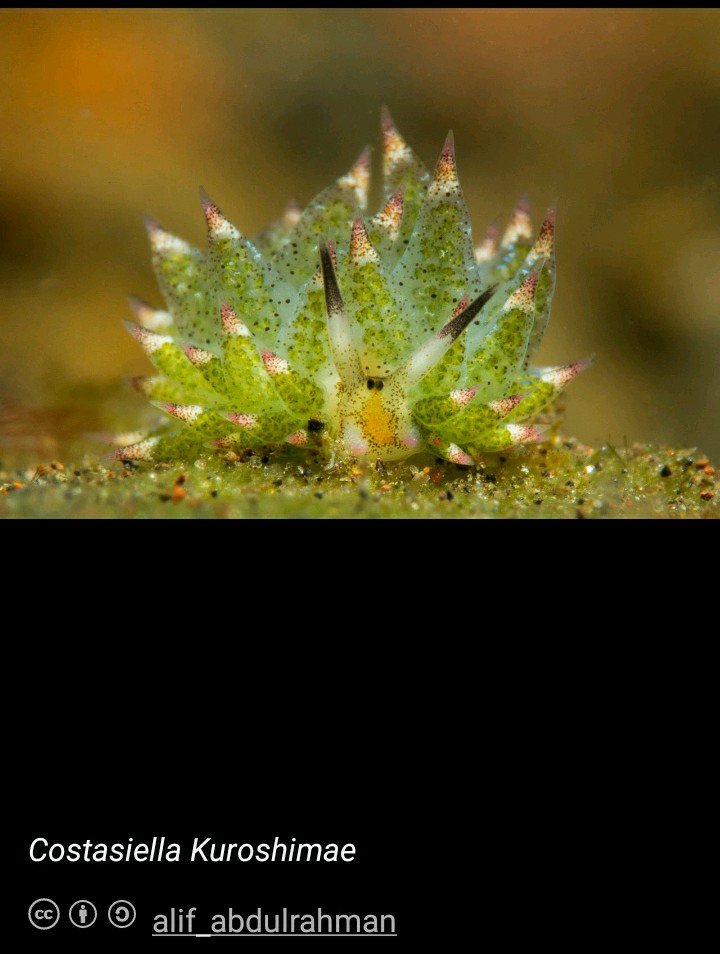
The name of this unique creature is Leaf Slug or, scientifically speaking, Costasiella kuroshimae. The name is quite Japanese and you guessed it right it was found on the coast of a Japanese island.

Aww, that’s cute.

How do they do it?

Costasiella kuroshimae are capable of a chemical process called kleptoplasty, in which they retain the chloroplasts from the algae they feed on. Absorbing the chloroplasts from algae then enables them to indirectly perform photosynthesis. (that’s the big fuss all around)

Kleptoplasty

Kleptoplasty is a symbiotic phenomenon whereby plastids, notable chloroplasts from algae, are separated by host organisms. The word is derived from “Kleptes” which is Greek for a thief. The alga is eaten normally and partially digested, leaving the plastid intact. The plastids are maintained within the host, temporarily continuing photosynthesis and benefiting the predator.

There are many such interesting animals and plants which do stunning works. Feel free to comment on them. (i may add it next time)

Source: Wikipedia

And on that note

Bye! Have a great time.

Our neighbouring galaxy

Science report

Today’s topic is: Our Neighbouring galaxy

Introduction

Out in the vastness of space, there are lots and lots of things which we can not think not be able to…

So we see our closest thing we can think of…..our nearest galaxy “Andromeda”(the name is quite the pomp)

Andromeda Galaxy

The Andromeda Galaxy also known as NGC 224 and originally the Andromeda Nebula, is a spiral galaxy approximately 2.5 million light-years from Earth and the nearest major galaxy to the Milky Way.

The virial mass of the Andromeda Galaxy is of the same order of magnitude as that of the Milky Way, at 1 trillion solar masses (2.0×10^42 kilograms)(That’s a lot!!!!). The mass of either galaxy is difficult to estimate with any accuracy, but it was long thought that the Andromeda Galaxy is more massive than the Milky Way by a margin of some 25% to 50%. This has been called into question by a 2018 study that cited a lower estimate on the mass of the Andromeda Galaxy, combined with preliminary reports on a 2019 study estimating a higher mass of the Milky Way.

Formation of a galaxy

Astronomers are still not sure how galaxies are made but there is an assumption that it starts with a giant cloud of gas that is swirling around and with interaction with gravitation these form into galaxies.

The Andromeda galaxy was formed 10 billion years ago.

The distance between the earth and the neighbouring galaxy is about  2.5 million light-years(it takes about 2.5 million years to go to Andromeda galaxy by travelling at the speed of light!!)

Collision with The milky way

As we are neighbours it is expected to have clashes between us and it is going to happen when umm…(we would be dead…that was cold)

But no worries it would take more than 4 billion years to collide directly with our galaxy.

The outcome isn’t clear as well but it is hypothesised that they will merge and form a spiral galaxy and earth may or may not be in our milky way Galaxy.

Till then 

Bye! Have a great time.

What are Simple Machines?

Science report

Today’s topic would be from a new category: Technology

So today’s topic is: Simple machines

Introduction

So if you know what simple machines are then you are ok. But if you don’t then don’t misunderstand it for everyday, household things like phones or gas stove.

Simple machines

A simple machine is a mechanical device that changes the direction or magnitude of a force. In general, they can be defined as the simplest mechanisms that use mechanical advantage (also called leverage) to multiply force.

They are: 

Pulley

Lever

Wheel and axle

Inclined plane

Wedge

Screw

Pulley

Pulley

A pulley is a wheel on an axle or a shaft that is designed to support movement and change of direction of a taut cable or belt or transfer of power between the shaft and cable or belt. In the case of a pulley supported by a frame or shell that does not transfer power to a shaft, but is used to guide the cable or exert a force, the supporting shell is called a block, and the pulley may be called a sheave.

It is difficult to weigh heavyweights without a pulley. When a pulley comes into action it seems easy to lift even if you can’t lift with bare hands.

Lever

You have certainly played see-saw with your friend and it seemed easy to lift your heavy friend. Then my friend meet lever(not Johnny lever)

A lever is a simple machine consisting of a rigid rod pivoted at a fixed fulcrum. A lever is a rigid body capable of rotating on a point on itself. Based on the locations of fulcrum, load and effort, the lever is divided into three types. Also, leverage is the mechanical advantage gained in a system. A lever amplifies an input force to provide a greater output force, which is said to provide leverage.

Wheel and axle

The wheel and axle is a machine consisting of a wheel attached to a smaller axle so that these two parts rotate together in which a force is transferred from one to the other. The wheel and axle can be viewed as a version of the lever, with a driving force applied tangentially to the perimeter of the wheel and a load force applied to the axle, respectively, that are balanced around the hinge which is the fulcrum.

You can see the wheel and axle under your car. Where the two wheels are connected with an axle(iron rod)

Inclined plane

This is a very common thing. You go quite fast when going downhill and you need not apply the accelerator to go ahead. Inclined planes are widely used to move heavy loads over vertical obstacles; examples vary from a ramp used to load goods into a truck, to a person walking up a pedestrian ramp, etc.

Wedge

A wedge is a triangular-shaped tool and is a portable inclined plane. It can be used to separate two objects or portions of an object, lift an object, or hold an object in place. It functions by converting a force applied to its blunt end into forces perpendicular (normal) to its inclined surfaces. Although a short wedge with a wide-angle may do a job faster, it requires more force than a long wedge with a narrow-angle.

Screw

This is also a common thing. You might have seen screws but put things together. A screw is a mechanism that converts rotational motion to linear motion, and torque to a linear force(blah blah blah). The most common form consists of a cylindrical shaft with helical grooves or ridges called threads around the outside. The screw passes through a hole in another object or medium, with threads on the inside of the hole that mesh with the screw’s threads. When the shaft of the screw is rotated relative to the stationary threads, the screw moves along its axis relative to the medium surrounding it; for example, rotating a wood screw forces it into the wood. In screw mechanisms, the screw shaft can rotate through a threaded hole in a stationary object. Geometrically, a screw can be viewed as a narrow inclined plane wrapped around a cylinder.

Source: Wikipedia

Bye! Have a great time.

How to treat Common cold?

Science report

Today’s topic is: How to treat Common Cold?

Introduction

Hello. Today I am introducing another topic category: Medicine. Where I will be telling you how to treat common ailments.

Common cold

The common cold, also known simply as a cold, is a viral infectious disease of the upper respiratory tract that primarily affects the respiratory mucosa of the nose, throat, sinuses, and larynx. Signs and symptoms may appear less than two days after exposure to the virus. These may include coughing, sore throat, runny nose, sneezing, headache, and fever. People usually recover in seven to ten days, but some symptoms may last up to three weeks. Occasionally, those with other health problems may develop pneumonia.

They spread through the air during close contact with infected people or indirectly through contact with objects in the environment, followed by transfer to the mouth or nose.

Signs and symptoms

The typical symptoms of a cold include cough, runny nose, sneezing, blockage of the nasal cavity and a sore throat, sometimes accompanied by muscle ache, fatigue and headache. In adults, a fever is generally not present but it is common in infants and young children. 

A cold usually begins with fatigue, a feeling of being chilled, sneezing, and a headache, followed in a couple of days by a runny nose and cough. Symptoms may begin within sixteen hours of exposure and typically peak two to four days after onset. They usually resolve in seven to ten days, but some can last for up to three weeks. The average duration of cough is eighteen days and in some cases, people develop a post-viral cough which can linger after the infection is gone.

Fact: Actually, Coronaviruses are a group of viruses known for causing the common cold.

Transmission 

We know that there are many modes of transmission. The spread of the Common cold occurs with air transmission(sneezes, coughs).

So if you suspect someone(sus) having symptoms of cold stay away from him!! Or wear a mask.

Prevention

We all know prevention\precaution is better than cure. The only useful ways to reduce the spread of cold viruses are physical measures such as using correct handwashing technique and face masks. Isolation or quarantine is not used as the disease is so widespread and symptoms are nonspecific. There is no vaccine to protect against the common cold. Vaccination has proven difficult as there are many viruses involved and they mutate rapidly. The creation of a broadly effective vaccine is, therefore, highly improbable.

Regular hand washing appears to be effective in reducing the transmission of cold viruses, especially among children. Whether the addition of antivirals or antibacterials to normal handwashing provides greater benefit is unknown. Wearing face masks when around people who are infected may be beneficial; however, there is insufficient evidence for maintaining a greater social distance.

Remedies

There are many homemade remedies like:

Ginger tea

Steam

Saltwater gargle

Keep hydrated.

Did you know

The fever is not harmful but helpful for the body to fight. Because the body needs a high temperature to fight foreign bodies.

Therefore whenever you have a fever, that’s an immune response against the foreign bodies.

Bye! Have a great time.

How come flame does not have a shadow?

Science experiment

Topic: How come Flame does not have shadows?

Introduction
We all know about candles or the fireplace. But do you know that flames and fire do not have shadows when a light source is projected on them. Let’s discuss this in detail.

Materials
1)Lit Candle
2)A torch.
3)A screen or a wall
4)Darkness

Procedure
This is an extremely simple experiment, you just have to light a candle and show a torch to it onto the screen or wall. The candle will have a shadow but the flame will not have a shadow. Why do you ask…
WITCHCRAFT. Nah just kidding.

Explanation
The first reason is that the flame is itself a source of light.
Now, a shadow is a surface that is less bright than its surroundings because something is blocking light partially or fully from that area.
If the light source behind the flame is brighter than the flame, then the flame would cast a shadow. However, it’s usually not possible because the second reason is that the flame in itself is the brightest source of light and also because the flame is transparent to some extent.

Does the sun have a shadow?
The question is when there is a planet behind it does it cast any shadow or with some special alignment?
No! What a silly question( I told you to follow my posts)The sun is the brightest object in the solar system(until a big torch comes tagging along). As I said earlier the plane(where the objects are located in the same area) should have a brighter source of light than it.

Bye! Have a great time.

How does an Electrical battery works?

Science report

Today’s topic is: How does an Electrical cell work?

Introduction

Ok, so Electrical cell right….so this is a chemistry topic it involves the work of chemicals and ions. So what is an ion?

Ions 

An ion is a charged atom or molecule. It is charged because the number of electrons does not equal the number of protons in the atom or molecule. An atom can acquire a positive charge or a negative charge depending on whether the number of electrons in an atom is greater or less than the number of protons in the atom.

Aluminum – Al. +3(cation)

Barium – Ba. +2(cation)

Calcium – Ca. +2(cation)

Chlorine- Cl- (anion)(Not onion)

Cell

A cell is a basic electrochemical unit that contains the electrodes, separator, and electrolyte. (a single part of battery)

Battery

A battery or battery pack is a collection of cells or cell assemblies, with housing, electrical connections, and possibly electronics for control and protection. (collection of cells)

Do you know: Our brain produces enough electricity to light a 2v bulb. Keep thinking!

Anode and Cathode

For rechargeable cells, the term anode (or negative electrode) designates the electrode where oxidation is taking place during the discharge cycle; the other electrode is the cathode (or positive electrode). During the charge cycle, the positive electrode becomes the anode and the negative electrode becomes the cathode. For most lithium-ion cells, the lithium-oxide electrode is the positive electrode.

Electrolyte 

A substance that when molten in a solution, ionized and then the solution starts conducted electricity.

Working

Batteries convert chemical energy directly to electrical energy. In many cases, the electrical energy released is the difference in the cohesive or bond energies of the metals, oxides, or molecules undergoing the electrochemical reaction. For instance, energy can be stored in Zn(Zinc) or Li(Lithium), which are high-energy metals because they are not stabilized by d-electron bonding, unlike transition metals. Batteries are designed so that the energetically favourable redox reaction can occur only when electrons move through the external part of the circuit.

The voltage developed across a cell’s terminals depends on the energy release of the chemical reactions of its electrodes and electrolyte.

Primary batteries

Primary batteries, or primary cells, can produce current immediately on assembly. These are most commonly used in portable devices that have a low current drain, are used only intermittently, or are used well away from an alternative power source, such as in alarm and communication circuits where other electric power is only intermittently available. Disposable primary cells cannot be reliably recharged, since the chemical reactions are not easily reversible and active materials may not return to their original forms.

Secondary batteries

Secondary batteries, also known as secondary cells, or rechargeable batteries, must be charged before first use; they are usually assembled with active materials in the discharged state. Rechargeable batteries are (re)charged by applying electric current, which reverses the chemical reactions that occur during discharge/use. Devices to supply the appropriate current are called chargers.

Serious fact: If a cell is ingested into the body it may leak and lead to tissue damage and even death.

Homemade cells

Almost any liquid or a moist object that has enough ions to be electrically conductive can serve as the electrolyte for a cell. As a novelty or science demonstration, it is possible to insert two electrodes made of different metals into a lemon, potato, etc. and generate small amounts of electricity. “Two-potato clocks” are also widely available in hobby and toy stores; they consist of a pair of cells, each consisting of potato with two electrodes inserted into it, wired in series to form a battery with enough voltage to power a digital clock. Homemade cells of this kind are of no practical use.

Fun fact: Sony company has created a biological cell that generates electricity from sugars similar to how the body makes energy. It generated electricity with the use of enzymes that break down carbohydrates.

To the good use

Since Li-ion batteries contain less toxic metals than other types of batteries which may contain lead or cadmium, they are generally categorized as non-hazardous waste. Li-ion battery elements including iron, copper, nickel and cobalt are considered safe for incinerators and landfills. These metals can be recycled, usually by burning away the other materials, but mining generally remains cheaper than recycling. Recycling may cost 210rs/kg. In the past, not much was invested into recycling Li-ion batteries due to cost, complexity and low yield.

Many types of batteries employ toxic materials such as lead, mercury, and cadmium as an electrode or electrolyte. When each battery reaches the end of life it must be disposed of to prevent environmental damage. Batteries are one form of electronic waste (e-waste). E-waste recycling services recover toxic substances, which can then be used for new batteries.

Bye! Have a great time 

Light, which we can not see

Science report

Today’s topic is: Light which we can not see?

Introduction

You must be wondering what are the light which we can’t see, we can see many colours, isn’t that supposed to constitute the light?

Are there more things to see from our eyes which we are not able to see?

Are we able to unlock our supernatural power?

Ok so without sounding like Morgan Freeman. Let’s start.

Electromagnetic spectrum

There are many parts of the electromagnetic spectrum(for simplicity let’s use the light of the ES)

There are parts of light that we cannot see. Because our eyes are not capable of producing an image with that spectrum of light. (duh..)

So what constitutes light?

Gamma radiation

Gamma rays are an electromagnetic spectrum. It is emitted by decaying radioactive waste. Therefore it is quite harmful and hazardous to organic matter and living compounds.

Its wavelength is 10^(-12), which is even smaller than a water molecule.

Natural sources of gamma rays originating on Earth are mostly a result of radioactive decay and secondary radiation from atmospheric interactions with cosmic ray particles. However, there are other rare natural sources, such as terrestrial gamma-ray flashes, which produce gamma rays from electron action upon the nucleus. Notable artificial sources of gamma rays include fission, such as that which occurs in nuclear reactors, and high energy physics experiments, such as neutral pion decay and nuclear fusion.

X-rays 

As the name suggests, it was not identified in the early 90s therefore it was named “X rays”

Its wavelength is 10^(-11) and it passes through soft objects but reflects upon striking hard objects. Therefore it is used to look at the joints and bones of the body as it is harder and less penetrable than muscles. It is used to see whether you have cracked(fractured) your knee while recklessly playing or had an unfortunate accident. (sad)

Ultraviolet rays

Ultraviolet (UV) is a form of electromagnetic radiation with wavelengths from 10 nm to 400 nm shorter than that of visible light, but longer than X-rays. UV radiation is present in the sunlight and constitutes about 10% of the total electromagnetic radiation output from the Sun. It is also produced by electric arcs and specialized lights, such as mercury-vapour lamps, tanning lamps, and black lights. Although long-wavelength ultraviolet light is not considered ionizing radiation because its photons lack the energy to ionize atoms, it can cause chemical reactions and cause many substances to glow or fluoresce. Consequently, the chemical and biological effects of UV are greater than simple heating effects, and many practical applications of UV radiation derive from its interactions with organic molecules.

Visible light

Ahh…it is the light which we can see. It involves colours like Red, Orange, Yellow, Green, Blue, Indigo and Violet.

It is a small spectrum of 400nm-700nm. Red has the biggest wavelength, therefore, we can see it quickly and it is also the reason why the traffic light has the colour red so people can see it from afar.

Infrared rays

Infrared (IR), sometimes called infrared light, is electromagnetic radiation (EMR) with wavelengths longer than visible light. It is therefore invisible to the human eye. IR is generally understood to encompass wavelengths from the nominal red edge of the visible spectrum around 700 nanometers to 1 millimetre. Black-body radiation from objects near room temperature is almost all at infrared wavelengths. As a form of electromagnetic radiation, IR propagates energy and momentum, with properties corresponding to both those of a wave and a particle, the photon. Infrared radiation is used in industrial, scientific, military, commercial, and medical applications. Night-vision devices using active near-infrared illumination allow people or animals to be observed without the observer being detected. Military and civilian applications include target acquisition, surveillance, night vision, homing, and tracking.

Microwaves

A microwave is a form of electromagnetic radiation with wavelengths ranging from about one meter to one millimetre.

The prefix micro- in the microwave is not meant to suggest a wavelength in the micrometre range. Rather, it indicates that microwaves are “small” (having shorter wavelengths). High-power microwave sources use specialized vacuum tubes to generate microwaves. These devices operate on different principles from low-frequency vacuum tubes, using the ballistic motion of electrons in a vacuum under the influence of controlling electric or magnetic fields, and include the magnetron (used in microwave ovens).

Radio waves

Radio waves are a type of electromagnetic radiation with wavelengths in the electromagnetic spectrum longer than infrared light. Radio waves have frequencies as high as 10,000 km (longer than the radius of the Earth).to as low as 1 mm  (shorter than a grain of rice). Like all electromagnetic waves, radio waves in vacuum travel at the speed of light, and in the Earth’s atmosphere at a close, but slightly lower speed. Radio waves are generated by charged particles undergoing acceleration, such as time-varying electric currents. Naturally occurring radio waves are emitted by lightning and astronomical objects and are part of the blackbody radiation emitted by all warm objects.

Effect of the Light spectrum on animals

Many species can see light within frequencies outside the human “visible spectrum”. Bees and many other insects can detect ultraviolet light, which helps them find nectar in flowers. Plant subspecies sensitive colour, insect pollination may owe reproductive success to their appearance in ultraviolet light rather than how colourful they appear to humans. Birds, too, can see into the ultraviolet (300–400 nm), and some have sex-dependent markings on their plumage that are visible only in the ultraviolet range. Many animals that can see into the ultraviolet range cannot see a red light or any other reddish wavelengths. Bees’ visible spectrum ends at about 590 nm, just before the orange wavelengths start. Birds can see some red wavelengths, although not as far into the light spectrum as humans. The popular belief that the common goldfish is the only animal that can see both infrared and ultraviolet light is incorrect because goldfish cannot see infrared light.

Most mammals are dichromatic, and dogs and horses are often thought to be colour blind. They are sensitive colours, sensiticolours ray as humans. Some snakes can “see” radiant heat at wavelengths between 5 and 30 μm to a degree of accuracy such that a blind rattlesnake can target vulnerable body parts of the prey at which it strikes, and other snakes with the organ may detect warm bodies from a meter away. It may also be used in thermoregulation and predator detection. 

Bye! Have a great time.
What is Oobleck?

Science Experiment

Hello, this is my first science experiment in this blog.

Today’s topic is OOBLECK

Introduction

Oobleck is a non-newtonian fluid. That is, it acts like a liquid when being poured, but like a solid when a force is acting on it. You can grab it and then it will ooze out of your hands. Make enough Oobleck and you can even walk on it!

Materials

– 1 cup water

– 1.5-2 cups cornstarch

– a few drops of food colouring of your choice(if you want to. Not necessary)

What is Non-newtonian fluid?

A non-Newtonian fluid is a fluid that does not follow Newton’s law of viscosity, i.e., constant viscosity independent of stress. In non-Newtonian fluids, viscosity can change when under force to either more liquid or more solid. Ketchup, for example, becomes runnier when shaken and is thus a non-Newtonian fluid. Many salt solutions and molten polymers are non-Newtonian fluids, as are many commonly found substances such as custard, honey, toothpaste, starch suspensions, corn starch, paint, blood, melted butter, and shampoo.

Viscosity: The viscosity of a fluid is a measure of its resistance to deformation at a given rate. For liquids, it corresponds to the informal concept of “thickness”: for example, the syrup has a higher viscosity than water.

What is Newtonian fluid then?

A Newtonian fluid is a fluid in which the viscous stresses arising from its flow, at every point, are linearly correlated to the local strain rate—the rate of change of its deformation over time. That is equivalent to saying those forces are proportional to the rates of change of the fluid’s velocity vector as one moves away from the point in question in various directions.

I hope you learnt something new today.

Bye! Have a great time.

Design a site like this with WordPress.com
Get started